
Enhancing the ArcBlock Ecosystem: User Feedback and Improvement Proposals

→ Description
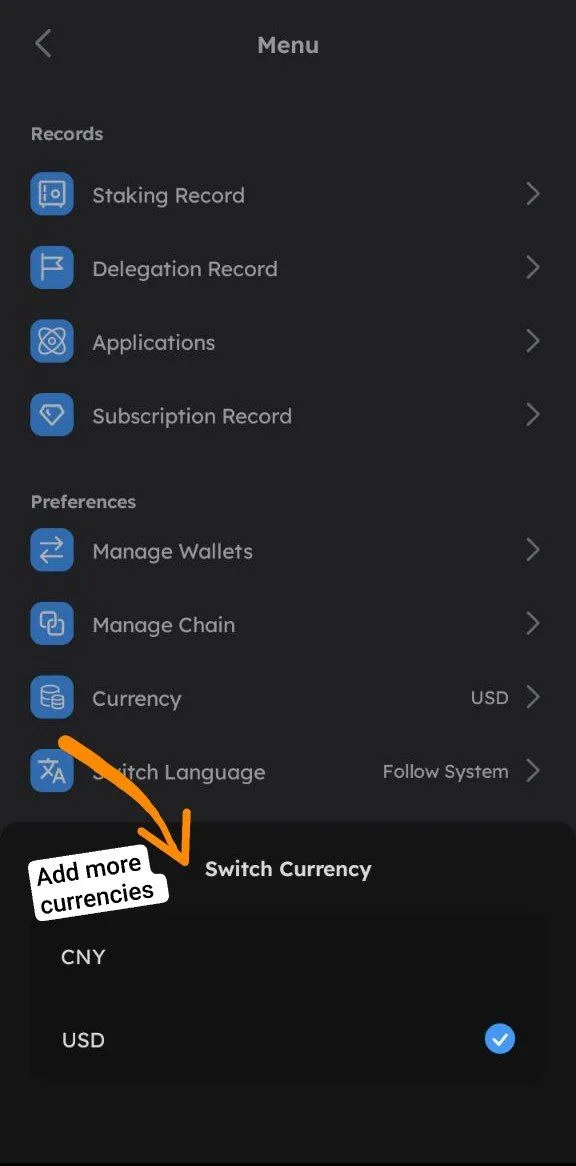
This document compiles and refines user feedback on several key components of the ArcBlock ecosystem, including the DID Mobile Wallet, the Community Platform, and the DID Wallet Extension. The original feedback highlights usability issues, missing features, and opportunities for better accessibility and adoption. I've clarified each issue, explained the underlying problems in detail, and proposed specific solutions to address them. These enhancements aim to improve user experience, security flexibility, global accessibility, and overall functionality, making ArcBlock more appealing for mass adoption in the decentralized identity (DID) and crypto space. Where relevant, suggestions include implementation ideas to make features more intuitive and efficient, while maintaining the platform's core principles of security and decentralization.
→ Refined Issues and Proposed Enhancements
- DID Mobile Wallet: Flexible Password Management for Wallet Switching and Transactions
Clarified Issue:
The current UI of the DID Mobile Wallet is visually appealing and user-friendly, but it lacks flexibility in password handling, particularly during wallet switching. Users are required to re-enter their password twice in quick succession, which can feel repetitive and frustrating, especially for frequent switches. While this is implemented for enhanced security, it doesn't account for user preferences in different scenarios. For instance, users might want to disable password prompts for low-risk actions (like viewing balances) but enable them for high-risk ones (like transactions). Currently, the system enforces a one-size-fits-all approach, potentially deterring casual users from engaging deeply with the wallet.
Detailed Explanation:
In decentralized wallets like ArcBlock's DID Wallet (formerly ABT Wallet), passwords or PINs are crucial for securing private keys and authorizing actions, aligning with W3C-compliant DID standards for secure identity management. However, rigid enforcement can lead to user fatigue, especially in mobile environments where quick access is key. This issue ties into broader usability improvements noted in past updates (e.g., versions 2.3 and 5.2 focused on streamlining identity management), but more granular controls are needed to balance security with convenience.
Proposed Solutions and Enhancements:
→ Implement Optional Password Settings: Add a settings menu within the wallet app where users can toggle password requirements independently for different actions. For example:
- Transaction Password: Enable/disable for sending assets or signing documents (default: enabled for security).
- Wallet Lock Timeout: Allow users to set a "no password" mode for short sessions (e.g., 5-10 minutes after unlocking), or require it only after the app is closed/backgrounded.
- Biometric Integration: Enhance with device biometrics (fingerprint or face ID) as an alternative to passwords, reducing the need for manual entry during switches.
→ User Education and Defaults: Include an onboarding tutorial explaining the security trade-offs (e.g., "Disabling passwords increases risk of unauthorized access if your device is compromised"). Set secure defaults but allow opt-in for flexibility.
→ Implementation Steps:
- Update the app's authentication module to support configurable flags (e.g., via local storage or encrypted user preferences).
- Test for security vulnerabilities, ensuring changes comply with DID specifications.
- Roll out in the next version (e.g., DID Wallet 5.3) with A/B testing for user satisfaction.
- DID Mobile Wallet: Expanded Currency Support for Global Users
Clarified Issue:
The wallet currently supports primarily crypto assets like ABT and those on ArcBlock Chain/Ethereum, but it lacks native fiat currency integrations for major global currencies such as the Euro (EUR), US Dollar (USD variants beyond basic), or others like GBP or JPY. This limits usability for users in non-US regions who need to convert or display values in local fiat without relying on external tools.
Detailed Explanation:
ArcBlock's wallet emphasizes multi-asset and multi-chain support (e.g., ArcBlock Chain, Ethereum Mainnet, EVM-compatible chains like BNB Smart Chain), but fiat display/conversion is minimal or absent. In a global crypto ecosystem, fiat on-ramps/off-ramps are essential for onboarding, especially as ArcBlock aims for mass adoption through decentralized identities. Without this, users must switch to third-party apps for price conversions, breaking the seamless experience promised in wallet updates like version 4.0.
Proposed Solutions and Enhancements:
→ Add Fiat Currency Display and Conversion: Integrate real-time fiat price feeds (e.g., via APIs from CoinGecko or Chainlink oracles) to show asset balances in selected local currencies. Support at least top 10 fiat currencies initially (EUR, USD, GBP, JPY, CNY, etc.).
→ On-Ramp/Off-Ramp Integration: Partner with fiat gateways (e.g., MoonPay or Ramp) for in-wallet purchases/sales in local currencies, similar to how the wallet already supports exchanges and atomic swaps.
→ User Customization: Allow users to select a default fiat currency in settings, with automatic conversion toggles for portfolio views.
→ Implementation Steps:
- Fetch fiat rates securely via decentralized oracles to avoid single points of failure.
- Update the UI's asset overview screen to include a dropdown for currency selection.
- Ensure compliance with regional regulations (e.g., KYC for fiat on-ramps in EU).
- DID Mobile Wallet and Ecosystem: Multi-Language Support for Broader Adoption
Clarified Issue:
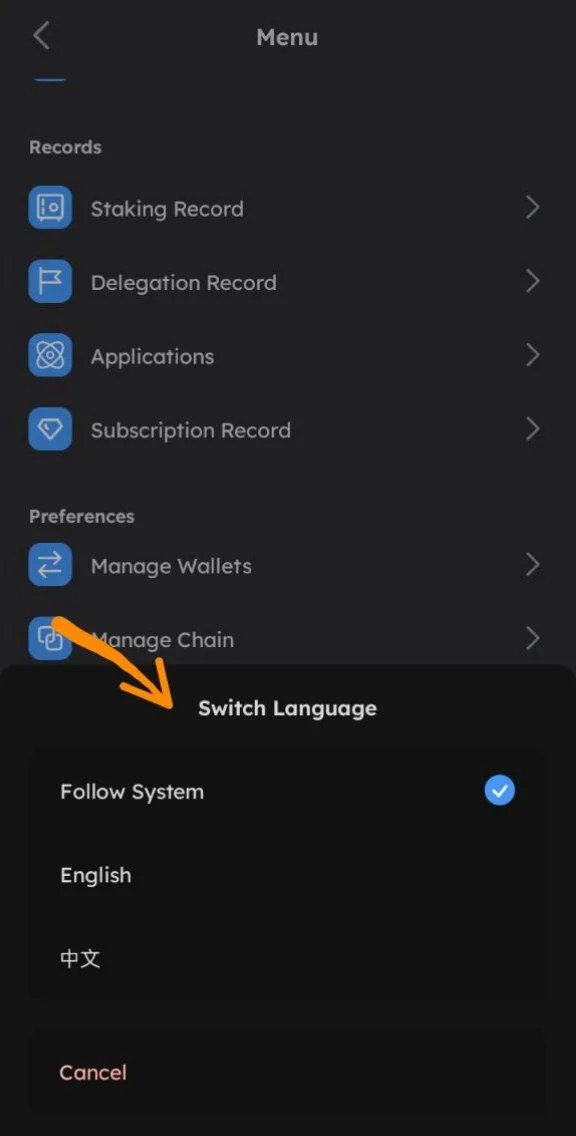
The wallet and related ArcBlock services (e.g., apps and documentation) are primarily in English, with limited or no support for other languages. This hinders onboarding for non-English speakers, reducing mass adoption potential, especially in regions like Europe, Asia, or Latin America where crypto interest is growing.
Detailed Explanation:
As a platform focused on decentralized identities and blockchain accessibility, ArcBlock's tools should cater to a global audience. Current limitations (e.g., English-only UI in DID Wallet versions up to 5.2) create barriers, as seen in user reviews praising ease of use but noting setup issues for non-native speakers. Multi-language support is a standard in modern apps and would align with ArcBlock's mission to redefine software ecosystems for everyone.
Proposed Solutions and Enhancements:
→ Full Localization: Implement support for 5-10 major languages initially (e.g., Spanish, French, German, Chinese, Japanese, Arabic), covering UI strings, error messages, and tutorials. Use libraries like i18n for dynamic translation.
→ Community-Driven Translations: Allow users to contribute translations via a GitHub repo or in-app feedback, rewarding contributors with ABT tokens.
→ Auto-Detection: Detect device language on first launch and default to the nearest supported option, with a manual override in settings.
→ Implementation Steps:
- Audit all translatable content and integrate a localization framework.
- Beta test with international users for accuracy (e.g., cultural nuances in crypto terms).
- Extend to all ArcBlock products, including the community platform, for consistency.
- Community Platform: Flexible Profile Picture (PFP) Management and Editing
Clarified Issue:
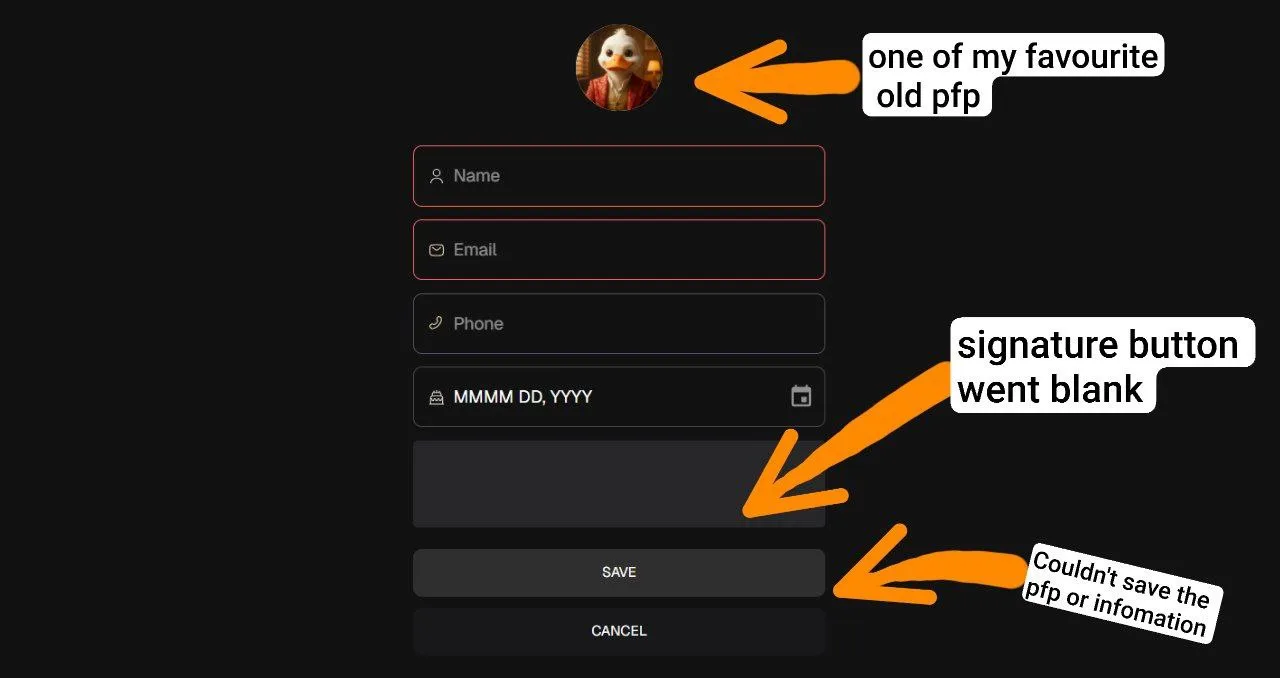
When attempting to change a profile picture (PFP) on the ArcBlock Community Platform, the process gets stuck or fails. If a user connects their X (formerly Twitter) account, the PFP appears permanent and unchangeable. Following guides leads to redirects to external sites, requiring wallet reconnection and additional steps. Buttons like "Signature" go blank without prompting for signing, and "Save" doesn't work, making it inaccessible for new users.
Detailed Explanation:
The community platform relies on DID for identity verification, integrating social logins like X for seamless onboarding. However, this ties profiles too rigidly to external data, ignoring user desires for customization. The broken flow (e.g., no signature pop-up) indicates UI bugs or incomplete integration with the wallet's authentication, frustrating users who expect simple edits like in social apps. This is a core feature for engagement, as profiles are key to community interactions.
Proposed Solutions and Enhancements:
→ Decouple and Simplify PFP Changes: Allow independent PFP uploads/edits without altering the linked DID or social account. Use IPFS or ArcBlock's storage for decentralized hosting to keep it permanent yet updatable.
→ Streamline the Process: Revise guides to be in-app only—no redirects. Add a dedicated "Edit Profile" section with step-by-step wizards: (1) Upload image, (2) Preview, (3) Sign with wallet (auto-prompt via deep link to DID Wallet), (4) Save.
→ Fix UI Bugs: Ensure buttons trigger modals/pop-ups reliably; add loading states and error handling (e.g., "Wallet not connected—connect now?").
→ Implementation Steps:
- Update backend to support PFP metadata updates via DID signatures.
- Test end-to-end with simulated X connections.
- Add tooltips/guides for new users, emphasizing flexibility over permanence.
- DID Mobile Wallet: Improved Chain Management for Low-Internet Environments
Clarified Issue:
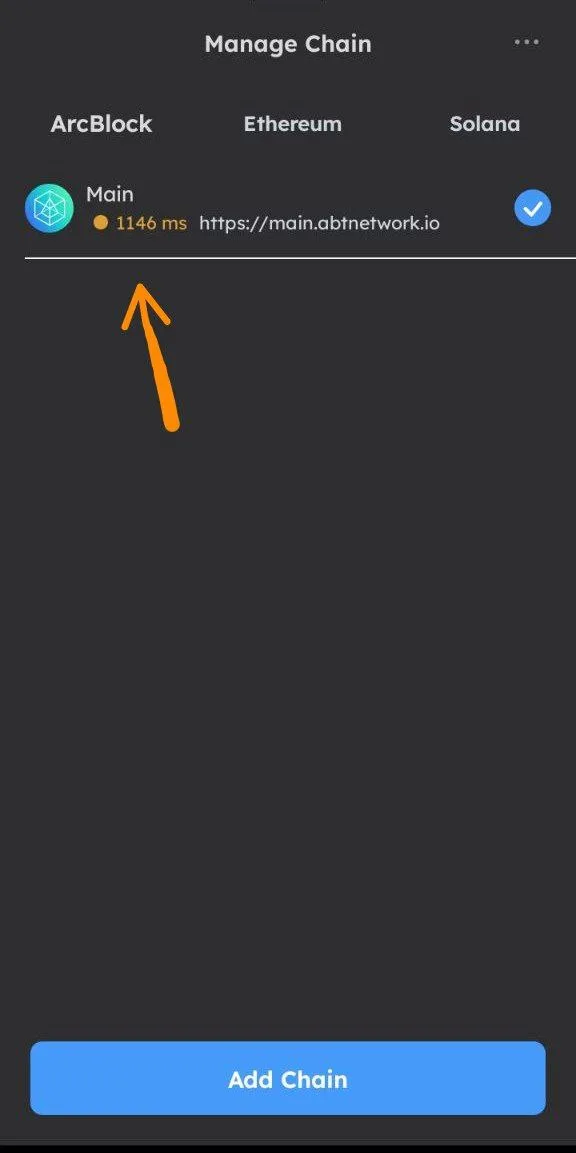
Chain management in the DID Mobile Wallet needs optimization for users in areas with slow or unreliable internet, as switching or syncing chains can be laggy or fail, impacting usability in developing regions.
Detailed Explanation:
The wallet supports multiple chains (ArcBlock, Ethereum, EVM compatibles), but real-time syncing relies on constant connectivity. In low-bandwidth scenarios, this leads to delays, as noted in app reviews mentioning initialization issues. Enhancements here would support ArcBlock's multi-chain vision while addressing real-world accessibility.
Proposed Solutions and Enhancements:
→ Offline-First Chain Handling: Cache chain data locally (e.g., recent balances, configs) and sync opportunistically. Add a "lite mode" that prioritizes essential chains.
→ Optimized Syncing: Use compressed data payloads and background syncing to minimize data usage; integrate with low-data protocols like those in Web3 standards.
→ User Controls: Let users pin preferred chains for faster access and set data limits.
→ Implementation Steps:
- Integrate IndexedDB or similar for local storage.
- Monitor network conditions via device APIs to throttle syncs.
- Test in simulated low-bandwidth environments.
- DID Mobile Wallet and Extension: Integrated Real-Time Coin Price Charts
Clarified Issue:
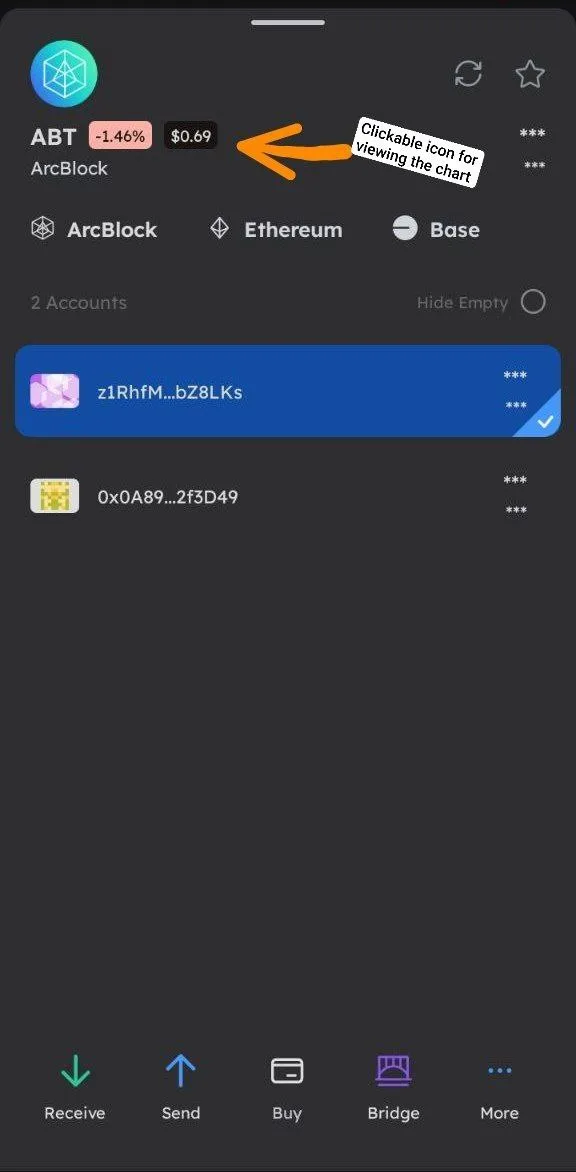
There's no built-in feature for viewing real-time price charts of coins like ABT or others in the wallet apps. Users must visit third-party sites, which disrupts the experience and adds security risks from external links.
Detailed Explanation:
With multi-asset support, charts would provide value without leaving the app, aligning with features like in-wallet DEX and NFTs. Current absence forces reliance on external tools, contrary to the "all-in-one" promise in DID Wallet descriptions.
Proposed Solutions and Enhancements:
→ Embedded Charts: Add a clickable icon/symbol next to assets that opens a slide-in or modal chart (using libraries like Chart.js). Source data from oracles for decentralization.
→ Customization: Allow toggling chart views (e.g., 1H/24H/7D) without cluttering the UI—keep it "easy breezy" as a non-intrusive overlay.
→ Extension Parity: Mirror this in the browser extension for desktop users.
→ Implementation Steps:
- Integrate a lightweight charting library with oracle feeds.
- Ensure mobile responsiveness to avoid UI tightness.
- Start with top assets like ABT, expand based on user feedback.
- DID Wallet Extension: Tooltip Previews for Icons
Clarified Issue:
Icons in the DID Wallet browser extension (e.g., for lock or contacts) lack text labels or hover previews, confusing users unfamiliar with the interface. Hovering doesn't show names, making navigation harder for beginners.
Detailed Explanation:
The extension supports ArcBlock and Ethereum ecosystems but assumes icon familiarity, which isn't universal. Simple tooltips would improve discoverability, especially since the extension is designed for browser-based DID management.
Proposed Solutions and Enhancements:
→ Add Hover Tooltips: Implement CSS/JS tooltips that display icon names (e.g., "Lock Wallet" on hover) using libraries like Tippy.js.
→ Accessibility Boost: Include ARIA labels for screen readers and optional always-on labels for new users.
→ Implementation Steps:
- Audit all icons and add data attributes for tooltips.
- Test for cross-browser compatibility (Chrome primary, but extend to others).
- DID Wallet Extension: Theme Customization Options
Clarified Issue:
The browser extension lacks theme switching (e.g., dark/light mode), which could improve usability based on user preferences or device settings.
Detailed Explanation:
Modern extensions like MetaMask offer themes for better eye comfort and personalization. ArcBlock's extension, focused on asset and identity management, would benefit from this to match evolving user expectations.
Proposed Solutions and Enhancements:
→ Basic Theme Toggle: Add a settings switch for light/dark/auto (based on OS theme), using CSS variables for easy styling.
→ Advanced Options: Future-proof with custom color schemes tied to DID profiles.
→ Implementation Steps:
- Define theme CSS classes and integrate with extension storage.
- Ensure consistency with mobile wallet themes.
- DID Wallet Extension: Support for Importing and Creating New Wallets
Clarified Issue:
The extension does not allow users to import existing wallets (e.g., via seed phrases) or create new ones directly, limiting its utility compared to the mobile app. This is a critical gap for multi-device management.
Detailed Explanation:
While the mobile DID Wallet supports creation and management, the extension (available on Chrome Web Store) focuses on connectivity but lacks full wallet lifecycle features. Users expect parity across platforms, especially for decentralized tools.
Proposed Solutions and Enhancements:
→ Add Creation/Import Functions: Include a "New Wallet" button for generating seeds and an "Import" option for mnemonics/private keys, with secure verification.
→ Security Measures: Enforce backups and warnings during import; integrate with DID for identity linking.
→ Implementation Steps:
- Extend the extension's core to handle key generation (using libraries like bip39).
- Sync with mobile via QR codes or cloud-encrypted backups.
- Update Chrome Store listing to highlight these features.
This would make the extension a standalone tool, improving cross-platform flexibility and addressing a major usability hole.
2 replies
We sincerely appreciate your valuable suggestions and will carefully evaluate them.👍
您好,未来钱包的迭代版本中我们会考虑您提出的一些改进建议。